
Buying a Used Custom Build Without Inheriting Problems

Custom motorcycles represent someone’s vision made metal. That vision might be brilliant engineering or a catalog of expensive mistakes. The difference matters when you hand over cash for a used build, because unlike factory bikes with service bulletins and known failure points, customs are one-offs with unique problems waiting to surface.
The appeal is obvious. A custom chopper, bobber, or cafe racer carries personality that no showroom bike delivers. But that personality comes with unknowns. The builder might have been a master fabricator or a weekend warrior with a wire-feed welder and optimism. Your job is to determine which before the title changes hands.
Start With the Frame and Title Match
Every inspection begins with the vehicle identification number. The VIN stamped on the frame neck must match the title exactly. Custom builds sometimes start as salvage titles, rebuilt titles, or frameless kit bikes that received a new VIN through state registration. None of these are automatic deal-breakers, but they affect value and insurability.
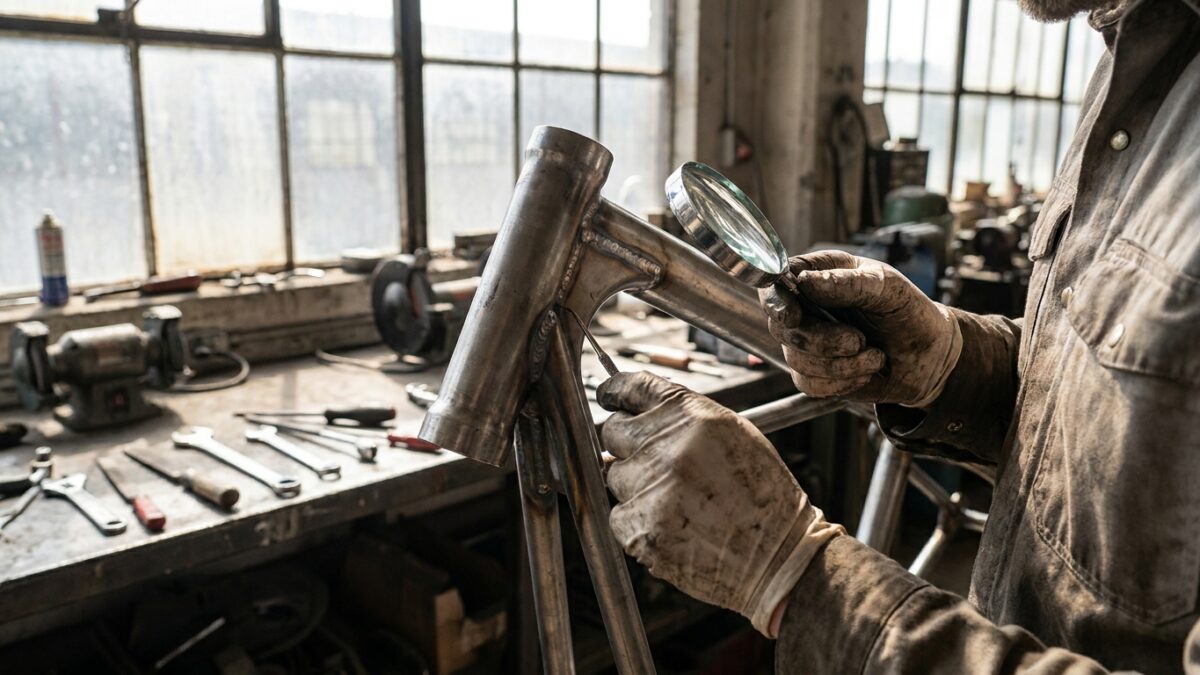
Check for frame modifications. Stretched frames, raked necks, and hardtail conversions change handling and stress points. Welds around the neck, swingarm mounts, and motor mounts should show consistent penetration and no cracks. Poor welds look like bird droppings or have gaps along the bead. Walk away from frames with visible cracks, rewelded repairs without documentation, or mismatched VINs.
If the bike started as a production model that was heavily modified, verify the VIN corresponds to that base model. Sellers sometimes represent a modified Sportster as a custom build to justify higher pricing. Understanding what you’re actually buying prevents overpaying for someone’s bolt-on project.
Electrical Systems Reveal Builder Competence
Custom electrical work separates skilled builders from parts-hangers. Factory wiring harnesses are engineered for specific loads, routing, and fault protection. Custom harnesses are often simplified, sometimes dangerously so.
Inspect all wiring for proper gauge wire, secure connections, and logical routing. Wires should not touch hot components, moving parts, or sharp edges. Look for crimp connectors instead of twist-and-tape joints. Check that the battery has a proper ground and that all lights, signals, and switches function correctly.
Aftermarket ignition systems and electronic fuel injection conversions require expertise. Ask for documentation about components used and tuning performed. A quality build includes labeled wires, sealed connectors, and a wiring diagram. Absence of these suggests rushed work that will fail at inconvenient moments.
Test everything electrical during your inspection. Headlight, taillight, brake light, turn signals, horn, starter, and kill switch. If the seller says something doesn’t work but is an easy fix, that fix is now your problem and your expense.
Engine and Transmission Modifications Need Documentation
Modified motors demand scrutiny. Increased displacement, aftermarket camshafts, and performance heads generate more power and more heat. Ask what internal work was done, who did it, and what break-in procedure was followed. Receipts matter here.
Aftermarket carburetors and fuel injection systems must match engine specifications. A motor built for high-RPM performance will not run properly on a stock jetting setup. Conversely, aggressive cams in a motor with insufficient compression creates a bike that idles poorly and lacks low-end torque.
Check for oil leaks around cylinder bases, rocker boxes, and the primary cover. Some seepage is normal on older motors, but fresh oil indicates recent failure or improper assembly. Pull the dipstick and inspect oil condition. Metal flakes or milky appearance signal internal damage.
Transmissions on custom builds sometimes use aftermarket cases, gear sets, or clutch assemblies. Shifting should be clean through all gears with no false neutrals or grinding. A slipping clutch or hard shifts point to improper setup or worn components that need immediate attention.
Suspension and Brakes Cannot Be Compromised
Custom builders often prioritize appearance over function when selecting suspension components. Hardtail frames eliminate rear suspension entirely, transferring all road impact to the rider and the frame. Extended forks look dramatic but reduce rake angle and hurt handling stability.
Front forks should compress and rebound smoothly without binding or leaking. Aftermarket inverted forks or springers need proper setup for rider weight and riding style. Ask if suspension has been tuned or if it remains at factory settings from whatever donor bike contributed parts.
Brakes are non-negotiable. Single disc front brakes are common on customs but require quality calipers, pads, and rotors. Check rotor thickness, pad remaining, and brake line condition. Braided steel lines are preferable to rubber. The rear brake, often overlooked on custom builds, must function correctly even if only a drum setup.
Test ride the bike if possible, evaluating brake feel, suspension compliance, and handling behavior. A custom that looks aggressive but handles unpredictably is a project you inherit, not a finished build.
Aftermarket Parts Quality Varies Wildly
Custom motorcycles mix parts from multiple manufacturers, and quality ranges from precision-machined American components to overseas castings with questionable metallurgy. Name-brand parts from established companies generally mean better quality control and available replacement parts.
Generic controls, foot pegs, and handlebars often use soft metals that bend or break. Examine welds on exhaust systems, especially where pipes meet collectors or flanges. Aftermarket wheels should be checked for true, spoke tension, and bearing condition.
Ask the seller for a parts list or build sheet. Quality builders document component choices and keep receipts. This documentation also helps with future maintenance and parts replacement. A bike built with proprietary or discontinued parts becomes difficult to maintain over time.
The Test Ride Tells the Truth
Numbers and visuals only reveal so much. Riding the motorcycle exposes issues that static inspection misses. The bike should start easily, idle smoothly, and respond predictably to throttle input. Vibration levels matter, especially on rigid-mount motors or hardtail frames.
Listen for unusual noises from the motor, transmission, or drivetrain. A properly built custom runs smoothly without rattles, clicks, or grinding sounds. Pay attention to clutch engagement, transmission shifting, and brake response under actual riding conditions.
If the seller refuses a test ride, ask why. Insurance concerns are legitimate, but unwillingness to demonstrate the bike’s function raises questions about hidden problems. At minimum, insist the seller ride the bike while you observe operation and listen for issues.
Independent Inspection Protects Your Investment
Paying a qualified mechanic to inspect a custom build before purchase costs a fraction of what hidden problems will demand. Find a shop experienced with custom motorcycles, not just dealership technicians familiar with one brand.
A professional inspection includes compression testing, leak-down testing, and detailed examination of frame integrity, electrical systems, and component quality. The inspector should provide a written report with photographs documenting concerns.
Sellers confident in their builds welcome third-party inspection. Resistance to professional evaluation suggests known issues the seller hopes you overlook. The inspection cost is cheap insurance against buying someone else’s expensive mistakes.
Custom motorcycles reward buyers who investigate thoroughly and walk away from questionable builds. The right custom bike delivers years of reliable riding and turning heads. The wrong one delivers constant repairs and regret over a hasty decision driven by aesthetics instead of mechanical reality.