
Ducati EDS 450 Rally Makes Dakar Debut as Limited-Run Racer

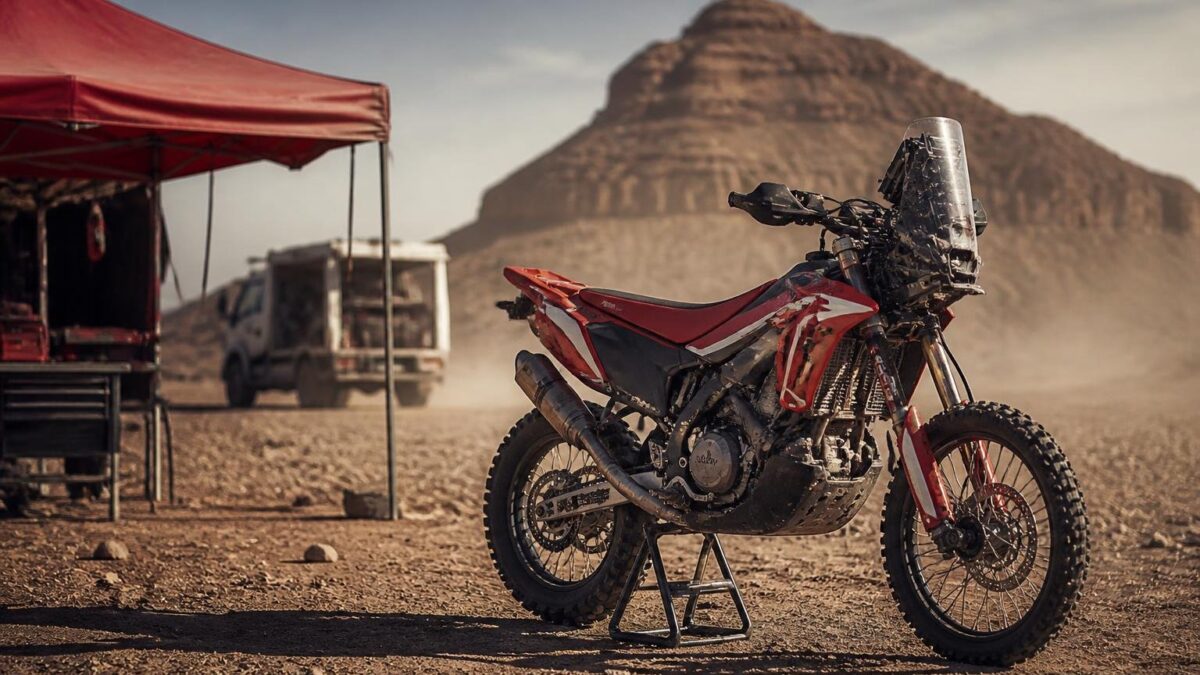
Ducati has entered the Dakar Rally with a new works machine designed specifically for competitive rally-raid. The EDS 450 Rally represents the Italian manufacturer’s first purpose-built desert racer, a limited-production 450cc single-cylinder platform developed outside its traditional V-twin architecture.
The move signals Ducati’s expansion beyond adventure-touring into genuine competition off-road machinery. While the DesertX brought the brand into the middleweight ADV segment, the EDS 450 Rally targets riders who compete rather than commute, built around FIM rally-raid regulations that favor 450cc displacement.
Purpose-Built Competition Platform
The EDS 450 Rally abandons Ducati’s signature L-twin configuration for a single-cylinder layout, the accepted standard for rally-raid racing. Modern Dakar competition demands specific power delivery characteristics that favor singles over twins: linear throttle response across wide RPM ranges, simplified maintenance in remote stages, and weight distribution suited to sustained high-speed desert running.
Rally-raid machines typically run 450cc four-stroke singles producing 50-60 horsepower, prioritizing durability and fuel range over outright power. Dakar regulations limit fuel capacity to 30 liters, making efficiency critical across stages that can exceed 500 kilometers daily. Engine architecture directly affects range, with singles offering better fuel economy than comparable twins.
Ducati has not disclosed complete specifications for the EDS 450 Rally. Production numbers remain unconfirmed, though the term “limited production” typically indicates homologation runs between 25 and 250 units, the minimum required for FIM competition eligibility depending on class entry.
Rally-Raid Requirements Shape Design
Competitive rally bikes differ fundamentally from street-legal adventure machines. Navigation equipment includes roadbook holders, GPS mounts, and digital trip meters calibrated to match rally organization waypoints. Fuel tanks mount high and wide for weight distribution, often wrapping around the steering head. Suspension travel reaches 300mm or more, with damping valved for sustained high-speed impacts.
Wheels run 21-inch front and 18-inch rear, sized for desert tires that balance flotation in sand with edge grip on hardpack. Brake systems favor rear bias, as front brakes see limited use in loose surfaces. Skid plates protect the entire underside, while crash protection extends to guards over engine cases, radiators, and frame tubes.
Seat height typically exceeds 950mm, placing riders well above the chassis for standing position visibility. Weight targets sit between 150-165 kilograms wet, significantly lighter than street-legal adventure bikes. Every component serves competition needs, with road-legal features like turn signals, mirrors, and kickstands eliminated.
Ducati’s Desert Racing History
This marks Ducati’s first works entry into rally-raid, though the brand competed in off-road disciplines decades ago. The Bologna factory built scramblers and enduro machines through the 1970s, but withdrew as Japanese manufacturers dominated off-road competition. Recent decades focused exclusively on street bikes and road racing, making the EDS 450 Rally a notable strategic shift.
The DesertX adventure bike, launched in 2022, hinted at renewed off-road interest but remained firmly in the touring category. That bike uses an 937cc Testastretta L-twin producing 110 horsepower, far removed from rally-raid specifications. The DesertX sells as a street-legal all-rounder, marketed for gravel roads and light trail use rather than competitive racing.
Developing a competitive rally bike requires years of testing and substantial financial commitment. Works teams spend millions annually on logistics, rider support, and machine development. KTM has dominated Dakar since 2001 with continuous factory involvement, winning 21 consecutive times through 2022. Honda returned with a works effort in 2013 after decades away, eventually winning in 2020. Ducati enters an established hierarchy where experience counts as much as horsepower.
Limited Production Strategy
Offering customer versions alongside works bikes follows established patterns in rally-raid. KTM sells the 450 Rally Replica to privateers, providing access to near-factory machinery for roughly $35,000. Honda offers the CRF450 Rally through select dealers, though availability remains limited. These bikes allow privateer teams to compete with proven platforms while manufacturers gain development feedback from multiple riders.
Limited production creates exclusivity while satisfying homologation requirements. Low-volume manufacturing avoids the emissions certification, dealer network support, and warranty infrastructure needed for mass-market bikes. Buyers typically purchase directly from racing departments, accepting minimal after-sales support in exchange for competition-ready machinery.
Pricing for limited-production rally bikes typically starts around $30,000 and can exceed $50,000 depending on specification level and factory support options. These machines target serious competitors rather than recreational riders, with maintenance intervals measured in race hours rather than street miles.
Market Positioning Questions
Several aspects remain unclear. Ducati has not confirmed whether customer bikes will match works specifications or represent detuned versions. The relationship between the EDS 450 Rally and the DesertX line needs clarification, as the bikes serve entirely different purposes despite both addressing off-road markets.
The EDS designation itself appears new for Ducati, potentially indicating a sub-brand for competition off-road machinery. Whether this platform could spawn other models, such as enduro or motocross variants, remains speculative but follows patterns used by multi-discipline manufacturers.
Dealer involvement also remains undefined. Rally-replica bikes typically bypass standard dealer networks, sold through factory racing departments or specialized competition outlets. This limits market reach but simplifies support for machines requiring race-specific maintenance knowledge.
What Comes Next
Dakar performance will determine the EDS 450 Rally’s future. First-year works entries rarely win, as competitive rally-raid demands extensive development. KTM spent years developing its winning formula, while Honda’s return required multiple seasons before reaching podium positions. Ducati faces steep learning curves in navigation strategy, desert terrain adaptation, and reliability under extreme conditions.
Production timeline and ordering details remain unannounced. Typical development cycles suggest limited customer availability in 2027 at earliest, following works team shakedown through 2026 competition seasons. Interested buyers should monitor factory racing announcements rather than dealer communications for purchase opportunities.