
Witness Reports Place Motorcyclist at 120 MPH Before Multi-Vehicle Crash on I-94

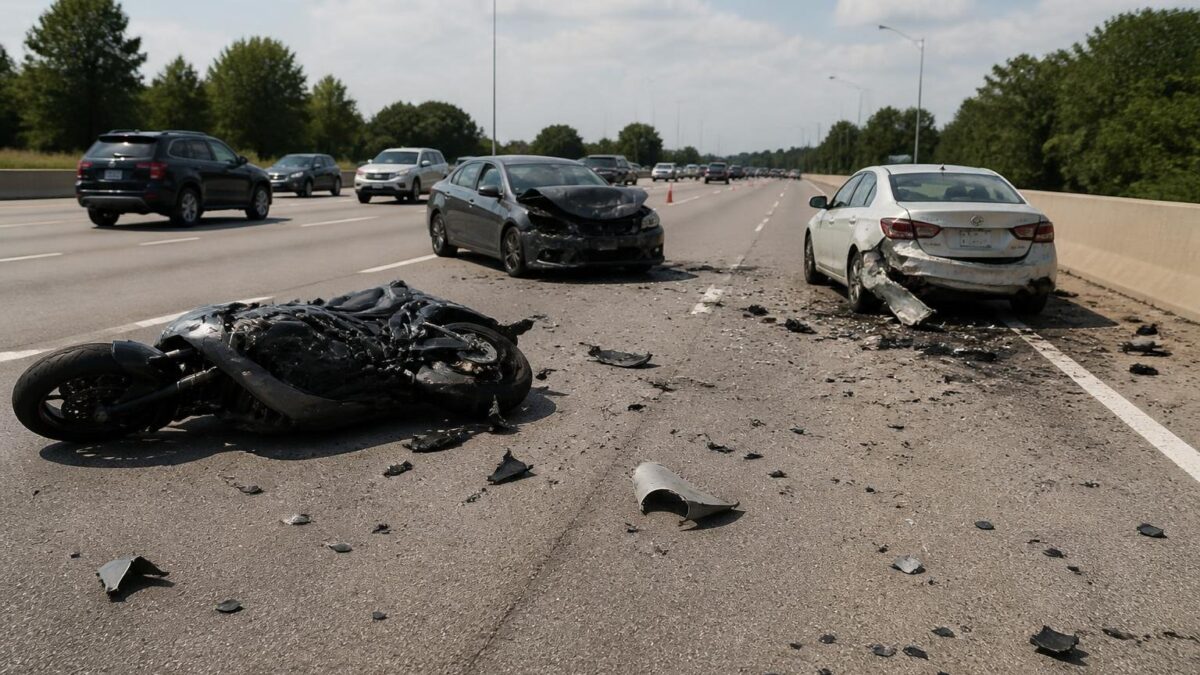
A motorcyclist traveling at what witnesses estimated as 120 miles per hour collided with a passenger vehicle on Interstate 94 near Lake Forest, Illinois, creating a debris field that extended into a Rolls-Royce traveling in an adjacent lane. The incident, which occurred on a stretch of highway that sees regular high-speed traffic, has reignited discussions about speed enforcement on suburban Chicago expressways.
According to initial reports from the scene, the motorcycle was traveling at excessive speed when it struck the rear or side of another vehicle. The impact generated debris that scattered across multiple lanes, striking at least one additional vehicle identified as a Rolls-Royce. The nature and extent of injuries have not been officially confirmed by Illinois State Police, who are leading the investigation.
Witness Accounts and Speed Estimates
Multiple witnesses at the scene reported seeing the motorcycle traveling at approximately 120 miles per hour in the moments before impact. While witness speed estimates are inherently subjective and not considered definitive evidence, they provide investigators with critical context about the seconds leading up to the collision.
The posted speed limit on this section of I-94 is typically 55 to 70 miles per hour depending on the specific zone. A motorcycle traveling at 120 miles per hour would be exceeding the limit by 50 to 65 miles per hour, placing the rider well into the range that Illinois law defines as aggravated speeding.
Under Illinois statute 625 ILCS 5/11-601.5, driving 26 miles per hour or more above the posted limit constitutes a Class B misdemeanor for a first offense, with penalties increasing for repeat violations or speeds exceeding certain thresholds. At 35 miles per hour or more over the limit, the offense becomes a Class A misdemeanor carrying potential jail time and mandatory license suspension.
I-94 Corridor and Enforcement Challenges
The section of Interstate 94 near Lake Forest runs through an affluent suburban corridor north of Chicago, connecting Milwaukee and the city through Lake County. The highway carries significant commuter and commercial traffic daily, with congestion patterns that vary dramatically between rush hours and off-peak periods.
During periods of light traffic, particularly late evening or early morning hours, some motorists treat the interstate as an open road. Illinois State Police have conducted periodic speed enforcement operations along this corridor, but the sheer volume of highway miles under their jurisdiction makes continuous monitoring difficult.
Lake County Sheriff’s Office and local police departments have limited jurisdiction on the interstate itself, with ISP holding primary responsibility for traffic enforcement on the roadway. This creates gaps in coverage that some riders and drivers exploit, particularly during hours when patrol presence is reduced.
Motorcycle Speed and Control Dynamics
Modern sportbikes are mechanically capable of reaching speeds well in excess of 120 miles per hour, with many models achieving top speeds above 160 miles per hour. However, the ability to reach such speeds and the ability to control a motorcycle at those speeds in traffic are entirely different matters.
At 120 miles per hour, a motorcycle covers 176 feet per second. Reaction time for even an alert rider is typically 1.5 seconds, meaning the bike travels more than 260 feet before the rider even begins to brake or swerve. Braking distances from that speed extend well beyond 500 feet under ideal conditions, and significantly farther if the rider is caught off-guard by changing traffic patterns.
Highway traffic creates constantly shifting conditions as vehicles merge, change lanes, and adjust speeds. A car moving at 70 miles per hour appears nearly stationary to a rider approaching at 120 miles per hour, closing the distance at 50 miles per hour differential. The geometry of closing speeds leaves almost no margin for error.
Legal and Insurance Implications
The motorcyclist in this incident, if found to have been traveling at the speeds witnesses reported, faces potential criminal charges beyond simple speeding violations. Reckless driving charges under Illinois law carry serious consequences, including license suspension, fines, and potential incarceration.
Illinois statute 625 ILCS 5/11-503 defines reckless driving as operating a vehicle with willful or wanton disregard for the safety of persons or property. Traveling at 120 miles per hour in traffic would likely meet that threshold. If injuries resulted from the collision, additional charges including aggravated reckless driving become possible, elevating the offense to a felony.
From an insurance perspective, a collision at excessive speed creates complications for all parties involved. The motorcyclist’s liability coverage, if carried, would typically respond to damages caused to other vehicles and their occupants. However, insurance companies routinely investigate whether policy exclusions apply in cases involving illegal activity.
The owners of the struck vehicles, particularly the Rolls-Royce damaged by debris, face their own insurance challenges. While their own comprehensive or collision coverage may respond to the damage, subrogation claims against the at-fault party become complex when that party was engaged in criminal conduct.
Broader Pattern of High-Speed Crashes
This incident fits within a broader pattern of high-speed motorcycle crashes on Chicago-area expressways. Illinois State Police crash data shows that excessive speed remains a leading contributing factor in motorcycle fatalities statewide, with interstate crashes often involving speeds far above posted limits.
The pandemic period saw an increase in high-speed incidents on many urban highways nationwide as reduced traffic volumes during lockdowns created temporarily empty roadways. Even as traffic has returned to near-normal levels, some riders continue behaviors developed during that period.
Rider advocacy groups consistently emphasize that responsible riding and adherence to speed limits protect both the motorcycling community’s reputation and individual riders’ legal rights. When crashes occur at extreme speeds, they generate media attention and public pressure that can lead to increased enforcement or new restrictions affecting all riders.
Investigation Continues
Illinois State Police continue investigating the circumstances of the crash, including analysis of physical evidence from the scene, vehicle damage patterns, and witness statements. Crash reconstruction specialists can use debris scatter patterns, vehicle rest positions, and damage characteristics to estimate speeds independent of witness accounts.
The investigation will determine what charges, if any, will be filed against the motorcyclist. The rider’s condition following the crash has not been publicly disclosed, nor have details about any injuries to occupants of the other vehicles involved.
For riders on I-94 and other Chicago-area expressways, the incident serves as a reminder that posted speed limits exist for reasons beyond arbitrary enforcement. The closing speeds, limited sight lines, and unpredictable traffic patterns of interstate riding leave no room for the margins that extreme speed eliminates.