
Charleston Interstate Crash Leaves Motorcyclist in Critical Condition

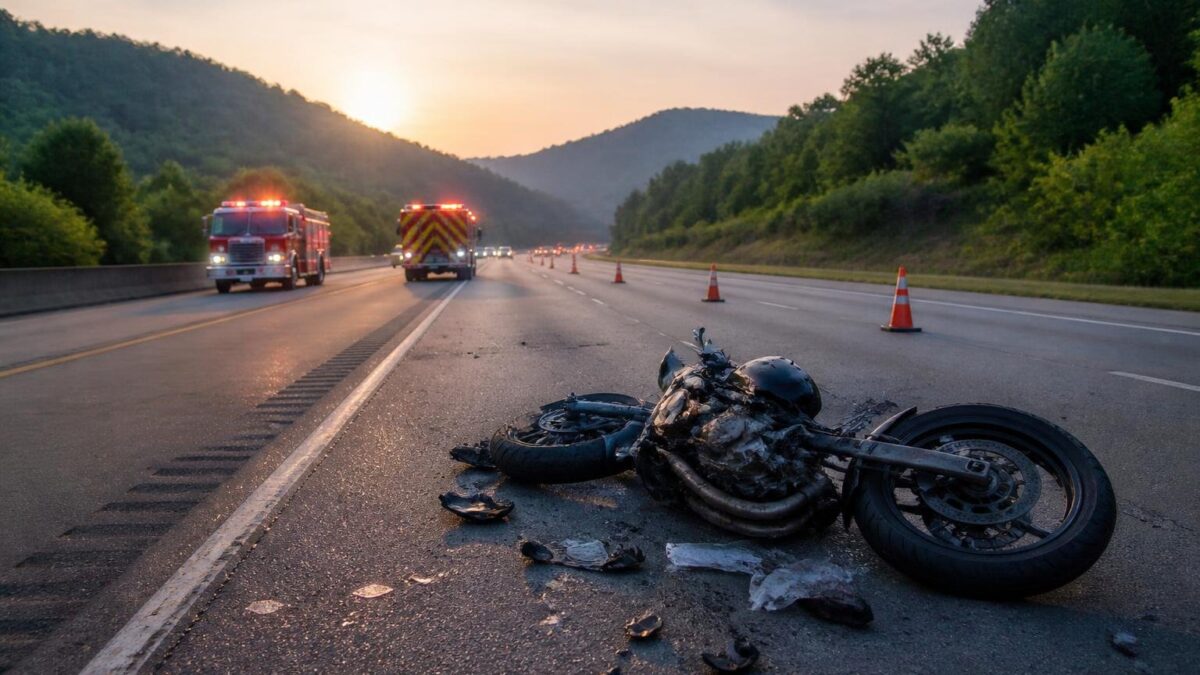
A motorcycle rider remains in critical condition following an early morning crash on Interstate 64 in Charleston, West Virginia. The incident occurred during the pre-dawn hours when visibility is typically reduced and traffic patterns shift between night and day.
According to local authorities, the collision involved the motorcyclist and at least one other vehicle. Emergency responders transported the rider to a nearby trauma center where medical personnel are working to stabilize injuries sustained in the impact. The severity of the injuries has placed the rider in critical care, though specific details about the nature and extent of those injuries have not been publicly released.
Interstate Riding Hazards
Interstate highways present distinct challenges for motorcyclists compared to surface streets. The higher speeds inherent to freeway travel leave less reaction time when unexpected situations develop. Vehicle merges, lane changes without proper signaling, and drivers distracted by mobile devices or fatigue all contribute to hazardous conditions for two-wheeled vehicles.
Early morning hours compound these risks. Reduced natural light makes motorcycles harder to spot for drivers in cars and trucks. Many motorists are either finishing overnight shifts with diminished alertness or beginning their commutes while not fully awake. The transition period between night and dawn creates lighting conditions where human vision struggles to adjust properly.
Charleston sits at a major crossroads for interstate commerce and regional travel. Interstate 64 serves as a primary east-west corridor through West Virginia, connecting the state to Virginia, Kentucky, and points beyond. The highway carries significant truck traffic alongside passenger vehicles, creating a mix of vehicle types moving at varying speeds.
West Virginia Motorcycle Safety Record
West Virginia has documented ongoing concerns about motorcycle crash statistics. The state’s mountainous terrain attracts riders seeking challenging roads with elevation changes and sweeping curves. While these roads offer engaging riding experiences, they also demand higher skill levels and constant attention.
State data shows motorcycle fatalities fluctuate year to year but remain a persistent traffic safety concern. Factors contributing to serious motorcycle crashes in West Virginia include impaired operation, excessive speed for conditions, and other vehicles failing to yield right of way to motorcyclists. Single-vehicle crashes where riders lose control on curves also account for a significant portion of serious incidents.
The West Virginia Division of Highways has implemented various measures aimed at improving motorcycle safety. These include enhanced signage on roads popular with riders, rumble strip modifications that are less hazardous to two-wheeled vehicles, and public awareness campaigns highlighting the need for all road users to watch for motorcycles.
Legal Framework and Rider Protections
West Virginia law requires motorcyclists and passengers to wear helmets that meet Department of Transportation standards. The state also mandates eye protection unless the motorcycle is equipped with a windscreen. These requirements aim to reduce injury severity when crashes occur, though no safety equipment can eliminate risk entirely.
Motorcycle operators in West Virginia must hold either a Class F motorcycle license or a motorcycle instruction permit. Obtaining the full license requires passing written and skills tests demonstrating proficiency in motorcycle control and traffic law knowledge. Riders under twenty-one must complete an approved motorcycle safety course before receiving their license.
Lane splitting, the practice of riding between lanes of stopped or slow-moving traffic, remains illegal in West Virginia. Motorcyclists must occupy a full lane position just as any other vehicle would. This legal requirement places riders directly in the flow of traffic rather than allowing them to position themselves away from potential rear-end collisions.
Investigation and Reconstruction
Crash reconstruction on interstate highways involves analyzing multiple evidence sources. Investigators examine skid marks, debris patterns, vehicle damage, and electronic data from vehicles equipped with event recorders. Highway surveillance cameras, if positioned near the crash location, can provide crucial visual documentation of how events unfolded.
Witness statements from other motorists who observed the crash or the moments leading up to it help investigators piece together the sequence of events. Traffic conditions at the time, including volume and speed of surrounding vehicles, factor into the reconstruction analysis.
Determining fault in motorcycle crashes often requires careful examination of all available evidence. Motorcycles leave less physical evidence than larger vehicles, making witness accounts and any available video footage particularly valuable. Investigators also consider whether road conditions, lighting, or infrastructure design contributed to the collision.
Medical Response and Trauma Care
Charleston benefits from having trauma center capabilities that can address severe injuries resulting from high-speed crashes. The golden hour concept in emergency medicine, referring to the critical first sixty minutes after serious trauma, makes proximity to advanced care facilities potentially life-saving.
Motorcycle crash injuries frequently involve multiple body systems. Road rash, fractures, internal injuries, and traumatic brain injuries can all occur simultaneously. Even when riders wear proper protective equipment, the physics of a motorcycle collision with a multi-ton vehicle create forces that safety gear can only partially mitigate.
Recovery from critical motorcycle crash injuries often requires extended hospitalization, multiple surgeries, and lengthy rehabilitation. The financial burden of such care can be substantial, making adequate insurance coverage essential for riders. West Virginia requires minimum liability coverage for motorcyclists, though these minimums may prove insufficient for serious injury scenarios.
Ongoing Concerns
The investigation into this Charleston crash continues as authorities work to determine exactly what happened in those early morning moments on Interstate 64. Whether charges will be filed depends on what evidence reveals about the actions of all parties involved.
For the injured rider, the immediate focus remains on survival and stabilization. The coming days will prove critical in determining the long-term prognosis and what recovery path lies ahead. Family, friends, and the broader riding community await updates on the rider’s condition while holding hope for improvement.
As riding season progresses and more motorcycles take to West Virginia’s roads and highways, this crash serves as a stark reminder of the vulnerabilities inherent in two-wheeled transportation. The gap between a routine ride and a life-threatening emergency can close in an instant, making defensive riding skills and constant vigilance essential survival tools for anyone who chooses to ride.